
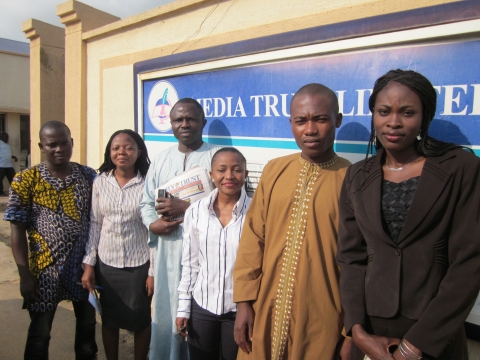
I hope training will help health reporters find the same credibility their colleagues have enjoyed.
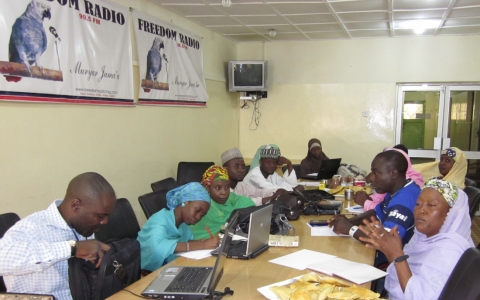
I found reporters at Freedom Radio, in Kano, very eager to learn about health reporting.
It’s been almost three months since I arrived here in Abuja to commence my Knight Fellowship and so much has happened with lots still lined up for the coming months and weeks. My decision to visit several newsrooms and some of my former colleagues who are now senior or managing editors -- seated often behind expensive and expansive mahogany desks -- gave me a good idea about where health journalism is headed in Nigeria.
I found reporters at Freedom Radio, in Kano, very eager to learn about health reporting.
My series of open meetings with journalists at Daily Trust, alongside informal meetings with line editors, was very educational and helped me understand where they wanted health reporting to be - factual, relevant, professionally covered like other beats and investigative. These concepts have become the core of my module.
Since I arrived that hot summer afternoon, I have made two trips to Kano, Nigeria’s biggest Northern Muslim city, to visit and train journalists at my secondary place of fellowship, Freedom Radio. If at the Daily Trust newspaper, my place of primary assignment, I found reporting challenges and an attitude that health reporting is best left for weaklings, the case of Freedom Radio was slightly different. There was an eagerness to learn more about health reporting skills and most importantly to specialize in certain aspects of health reporting. The attitude that the health beat was for the soft was not apparent and both male and female journalists at the radio station jostled to catch my attention.
I found reporters at Freedom Radio, in Kano, very eager to learn about health reporting.
Meeting to discuss story ideas, critiquing or examining reports submitted and showing them how to go about a story has been the focal point of my fellowship since I arrived. It is slowly breeding a new crop of health journalists who take their work seriously and are willing to learn.