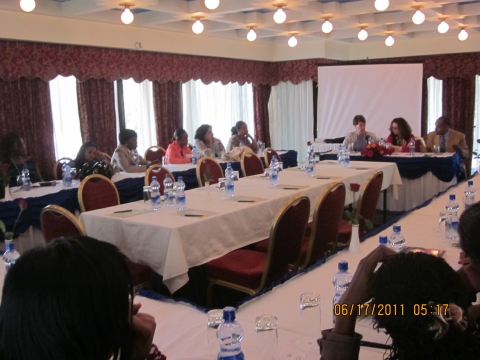
Many Senior Health journalists say the lack of training for health reporters has led to poor quality stories.
When I was invited in June to take part in an international discussion about health issues for senior-level women journalists from developing African countries, I jumped at the chance. I was eager to hear from participants about the challenges they have faced as health editors, reporters and producers for influential media organizations.
Many Senior Health journalists say the lack of training for health reporters has led to poor quality stories.
Since the objective was to examine pressing issues that affect women’s health in the region, the 13 participants, traveled to several organizations that are working to improve women’s reproductive health. After their visit to Addis Ababa Fistula Hospital, for example, many – including me – were left wondering why important health issues are not getting wide media coverage in Ethiopia.
As the frustrations came out, a couple of themes emerged that will be most helpful to me as I work to increase and improve health reporting in Ethiopia. Among the factors that are most challenging to this mission: most health reporters in Ethiopia have little, if any, formal training in health journalism; many news outlets are more interested in stories of shame and despair, not in reports that offer solutions or prevention techniques; a lack of the most basic journalism skills often means the credibility of health reports is often questioned; in an effort to attract more readers or viewers, sometimes the facts are exaggerated; and, media managers and editors aren’t inclined to give health reports a high profile, front-page status.
There were also signs of hope: Rina Jimenez-David from the Philippines said what matters to her is that the story gets published and captures the interest of the readers, whether it’s on the front page or inside; Shifa Mwesigye, from Uganda, believes that health reporting, if done properly and with passion, draws public attention to take action in practicing a safer way of life.
All of this is fodder for me to use moving forward. It is clear that media in developing countries is more than a source of information on health. Media empowers people to demand for health service access and information. Increasing the knowledge and skills of journalists to report on health matters as well as public exposure of attitudes and cultural beliefs towards health information is critical.