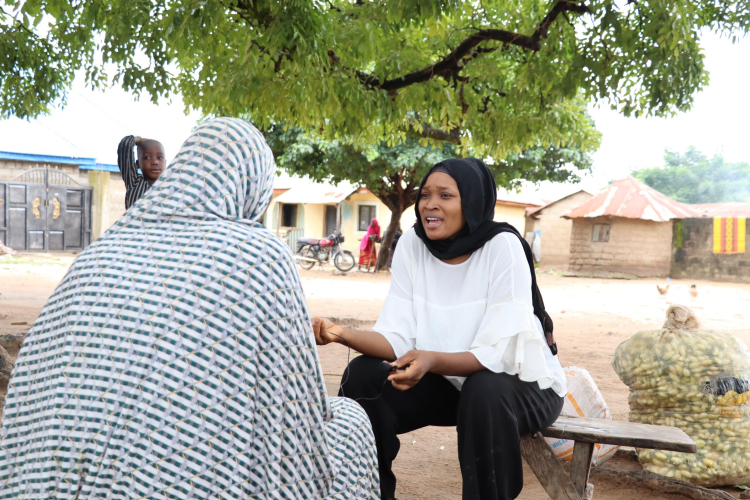
Zainab Bala is the team lead and editor of The Scoop Storytelling Initiative, a non-profit journalism platform dedicated to expanding underrepresented voices in Nigeria. She covers gender, climate, community affairs and other topics, with a focus on West Africa.
Her experience with the Elliott Award was a big career boost; it elevated her profile and helped her work create national debate in Nigeria, she says.
“For journalists like me, ICFJ’s support has been transformational. It builds confidence, strengthens editorial excellence, and ensures that important stories, stories that challenge stereotypes, empower communities, and inspire change don’t get lost,” Bala says.
This interview has been edited.
How have you been involved with ICFJ over the years?
Over the years, I have been closely connected with ICFJ through the IJNet opportunities platform, which is shaping my work as a storyteller.
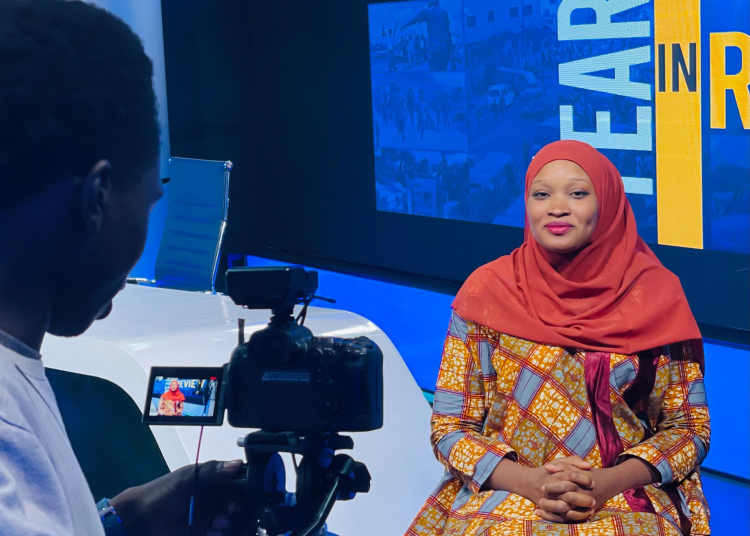
My journey with ICFJ began in 2021, when I received The Michael Elliott Award for Excellence in African Storytelling. I was honoured for The Almajiri, an investigative documentary I produced for the Viewer TV team.
The film explored the experiences of vulnerable boys in Northern Nigeria placed in the Almajiri system. It shed light on issues of exploitation, child neglect, and systemic failure, sparking national conversation and influencing public discourse on child protection. As part of the award, I participated in a transformative program at ICFJ headquarters in Washington, DC and a media immersion experience at AJ+, ProPublica, NPR and a host of others.
This exposure deepened my skills in long-form storytelling, editorial strategy, and global reporting standards. Since then, I have remained actively engaged with the ICFJ community, joining alumni sessions, contributing to peer learning opportunities, and connecting with other African journalists who leverage storytelling for social impact.
My involvement with ICFJ has elevated my reporting and expanded my commitment to telling nuanced, people-centered stories that drive accountability and inspire change.
What was the biggest outcome from participating in the program?
Participating in the Elliott Award program was a turning point in my career. The biggest outcome was the significant amplification and real-world impact of my documentary, The Almajiri, which exposed the exploitation and vulnerabilities faced by boys in Northern Nigeria’s Almajiri system.
The visibility and credibility of the award elevated the film’s reach. It sparked national debate, strengthened advocacy around child protection, and pushed stakeholders including policymakers and religious leaders to confront long-ignored issues within the system. It is coverage that may not have reached that level of influence without the platform and recognition provided by ICFJ.
Professionally, the program accelerated my growth. The newsroom immersion and the mentorship from global editors sharpened my editorial approach and strengthened my commitment to human-centred, accountability-driven storytelling. It also opened doors to international collaborations, new reporting opportunities, and long-term networks that continue to enrich my work today including global programmes such as the Mandela Washington Fellowship and expanded media visibility through features like my Jamlab interview and my IWMF profile.
What is something impactful you have worked on since participating in an ICFJ program?
One of the most meaningful things I’ve done since participating in the ICFJ program is establishing The Scoop Storytelling Initiative, a platform dedicated to amplifying underrepresented voices in governance, development, and climate justice. The Scoop was born to create a safe, accessible space where ordinary people, women, young people, and communities at the margins can tell their own stories on their own terms.
Since then, I’ve led several impactful projects I’m incredibly proud of. These include producing a documentary about pubescent maids and exploitation and Nigeria’s maternal death rate.
These stories have not only shaped public conversations but also influenced how media platforms approach climate, gender, and social-impact reporting.
Why is it so important right now to provide the kind of support to journalists that ICFJ does, especially in Africa?
It’s absolutely critical, now more than ever, to provide the kind of support to journalists that ICFJ offers especially in Africa because the media landscape across the continent is facing complex, high-stakes challenges that directly impact democracy, development, and people’s daily lives.
African journalists are reporting in environments where misinformation spreads faster than reliable facts, where newsrooms are underfunded, and where independent reporting is often met with political pressure, censorship, or even threats to safety. At the same time, we are expected to cover increasingly complicated issues from climate change and conflict to digital rights, public health, and governance often without the resources or specialized training required.
This is where ICFJ’s support becomes invaluable.
Their programs help African reporters break out of isolation, collaborate across borders, and access the tools needed to hold power to account.
In a moment where democracy, truth, and public trust are under pressure, supporting African journalists isn’t optional. It’s essential for a more informed, just, and accountable continent.
What kind of difficulties as a journalist have you faced in Nigeria? If applicable, how has ICFJ helped alleviate or support journalists with these difficulties?
As a journalist working in Nigeria, I’ve faced several challenges that shape both the work and the way we tell stories. One of the biggest is access to information, public institutions are often opaque, making it difficult to obtain accurate data, official responses, or transparent records. This slows down investigations and limits the depth of reporting.
There is also the challenge of safety. Reporting on sensitive issues whether it’s governance, insecurity, gender-based violence, or climate impacts in conflict-affected communities often comes with real risks. Many journalists, especially women, face harassment both online and offline. You’re constantly navigating security concerns while trying to do meaningful, community-centred work.
Another difficulty is the resource constraint within local newsrooms. Many outlets lack funding for in-depth reporting, fieldwork, or multimedia storytelling. Journalists are expected to do more with less, which affects the quality, depth, and consistency of coverage.
In addition, there’s the issue of misinformation, which spreads rapidly in Nigeria’s digital space. Journalists must combat false narratives while ensuring their own reporting is not drowned out by the noise.
*ICFJ’s Michael Elliott Award is celebrating its ten-year anniversary. You learn more about the program here, apply here and make a donation to support the program here.