
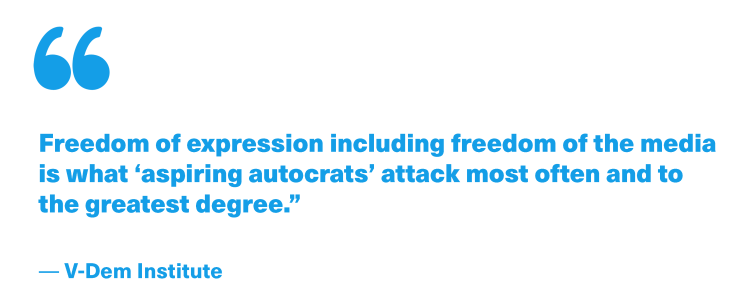
Today, 71 percent of people live in countries that are considered autocratic. That’s up from 48 percent just a decade ago. The independent research institute at the University of Gothenburg in Sweden that published these figures also found that nearly four dozen more countries are “autocratizing.”
The implications of this are profound. In the most oppressive autocracies, freedom of expression, freedom of association, free and fair elections and other democratic values are absent. In others, they may be present in part but insufficient.
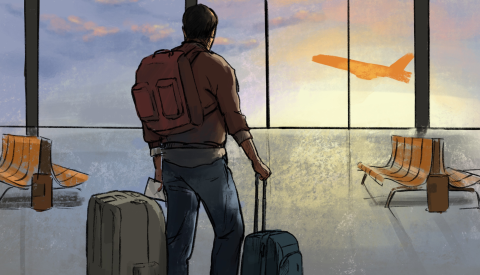
In the work we do at ICFJ, we see these trends up close. It is particularly evident in the increasing number of journalists forced to flee their homes due to threats designed to silence them. They come from every region of the world, countries like El Salvador and Nicaragua, Syria and Türkiye, Belarus and Russia, Hong Kong and Myanmar…the list goes on and on.
Recognizing the growing need, we have ramped up support for exiled journalists, many of whom face threats even after relocating. Examples include:
- Tailored resources: Our exiled media toolkit, published by ICFJ’s International Journalists’ Network (IJNet) in partnership with the Network of Exiled Media Outlets (NEMO), features case studies and practical advice for attracting funding, reaching home-country audiences, providing mental health support and more.
- Essential training and funds: Afghan media entrepreneurs in exile strengthened their digital security and learned new reporting and engagement skills through training from IJNet’s Mentoring Center. ICFJ selected several to receive funds that helped cover essential operating costs, including Zahra Nader, whose network of women reporters in Afghanistan are bravely covering Taliban abuses.
- Network building: Two new ICFJ Knight Fellows will focus their projects on supporting exiled media. Luz Mely Reyes, a distinguished journalist and media co-founder forced to flee Venezuela, will help create resources, connections and opportunities for exiled journalists in the Americas. José Nieves, the editor-in-chief of a Cuban newsroom whose entire team now operates outside the country, will help exiled news outlets reinvent themselves under challenging circumstances.
The needs of exiled media are urgent and unique, which is why tailored, increased support is so important. It helps ensure talented, courageous journalists who have lost so much can continue to empower their communities with information that pushes back against propaganda and disinformation – even from afar.